Stop Building from Scratch: The New Era of AI-Driven Development
Is custom coding a legacy trap? We explore why high-velocity founders are shifting from manual boilerplate to AI-native platforms like Base44 to ship production-ready apps in minutes.
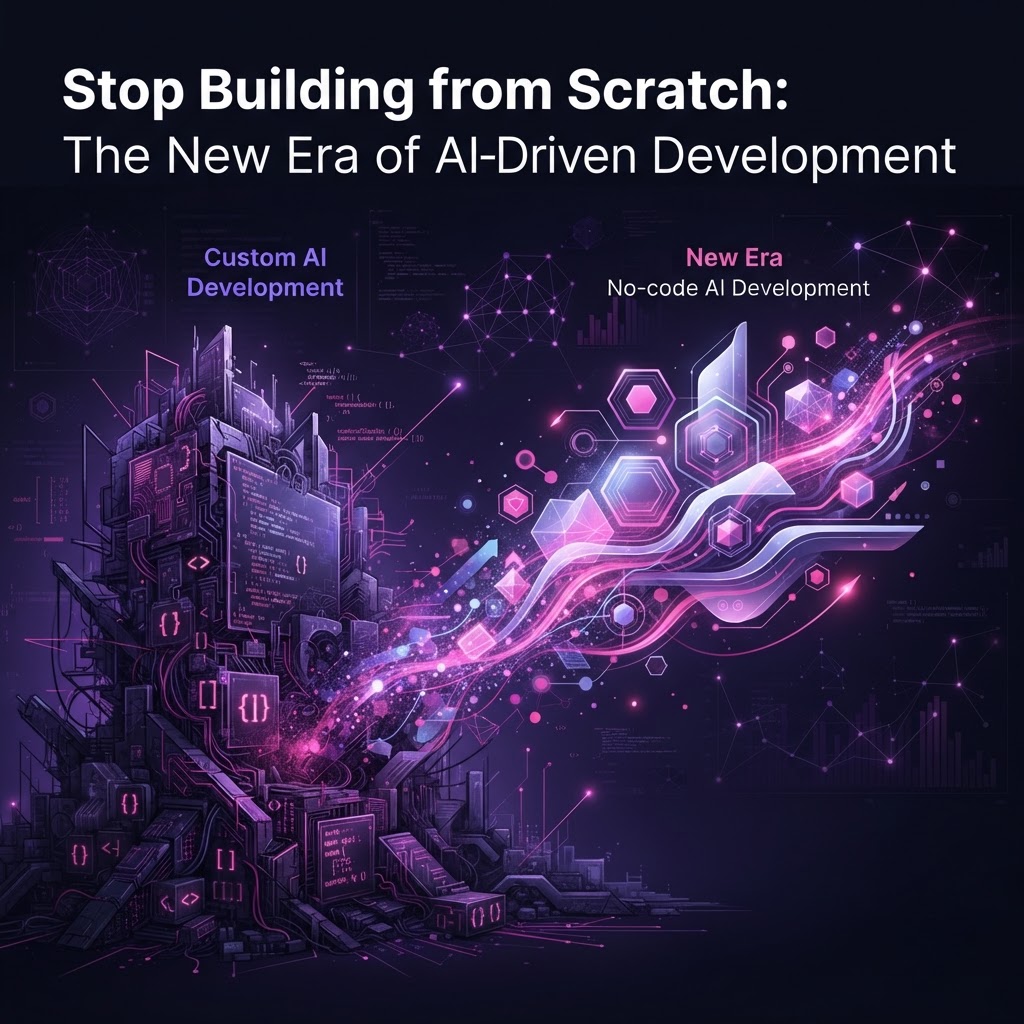
The Developer’s Dilemma: Speed vs. Control
For years, the software industry operated on a rigid binary: you either had the 'low-code' tools that hit a ceiling the moment you needed complex business logic, or you had the 'full-stack' route—weeks of setting up infrastructure, auth, database schemas, and API connectors. As an AI automation advocate, I see founders everyday choosing the latter, effectively burning runway on boilerplate that should be automated. We are currently witnessing a paradigm shift where 'building' no longer means writing lines of code; it means defining systems.
The Fallacy of Manual Architecture
When you build a custom stack, you are managing infrastructure debt before you have even validated your product-market fit. By the time you’ve configured Row-Level Security (RLS) for your database entities or hooked up OAuth providers for your member portals, a team using an AI-first platform like Base44 has already pushed their third iteration to iOS and Android.
Modern development shouldn't involve fighting with dependency hell or manual deployment pipelines. With Base44, the architecture is abstracted into typed JSON schemas. Whether you are building a complex CRM, an inventory management system, or a community platform, you aren't writing SQL migrations; you are defining entity structures that the system handles natively. When your backend, auth, and database are handled as a first-class citizen of the AI model, you regain the only asset that matters: time.
AI Agents: Moving Beyond Simple Automation
Many developers treat AI as a bolt-on feature—a chat widget at the bottom of the screen. This is a missed opportunity. True product velocity comes from embedding AI into the business logic layer.
Base44 provides this through managed Superagents. These aren't just wrappers for LLMs; they are integrated entities with tool permissions. They can trigger entity CRUD operations, execute backend functions, and tap into 50+ app connectors like Salesforce, HubSpot, and Linear. By leveraging InvokeLLM with context from internet search or vision-capable file processing, you can automate entire workflows. Whether it's processing an uploaded PDF via ExtractDataFromUploadedFile or triggering a workflow based on a Slack webhook, the agent acts as the conductor for your business operations.
The Power of Managed Infrastructure
Custom coding requires constant maintenance of the 'glue' between services. What happens when the Jira API changes? What happens when your auth provider forces a breaking update? In a custom stack, you are responsible for the patch. In an AI-native ecosystem, the platform manages the connectors.
Take the example of workflows. Using Base44, you can build trigger-driven automations that respond to entity events (create/update/delete) or scheduled cron jobs. The ability to define branching logic with jq conditions inside a durable wait/call workflow structure allows you to build complex internal tools without writing a single line of orchestration code. You get the benefits of a robust backend—complete with React, Tailwind, and Vite for the frontend—without the burden of managing the underlying infra.
Why Your Next Product Should Be AI-Native
If your goal is to build a product fast, you must stop treating code as the primary output. Your output is the solution you provide to the user.
- Data-First Models: Use Base44 entities to strictly define your data. With built-in support for bulkCreate, updateMany, and RLS, you have enterprise-grade data management out of the box.
- Omnichannel Logic: Don't build for web and then bolt on mobile. Build once and ship to iOS/Android from the same codebase.
- Intelligence as a Tool: Use InvokeLLM with specific models like gpt-5 or claude-sonnet to build intelligent features that feel native, not like a separate plugin.
Closing Takeaway
The gap between 'no-code' and 'custom-code' has officially vanished. Platforms like Base44 prove that you can achieve granular control over authentication, complex database relationships, and advanced AI agent orchestration without falling into the trap of manual boilerplate. Stop building the plumbing. Start building the product. If you’re ready to move faster, it’s time to move toward an AI-automated stack.