Stop Building Automations, Start Engineering Workflows
Simple triggers are a trap. Discover how moving to multi-step, failure-protected workflows in Base44 turns brittle automations into robust, production-grade logic.
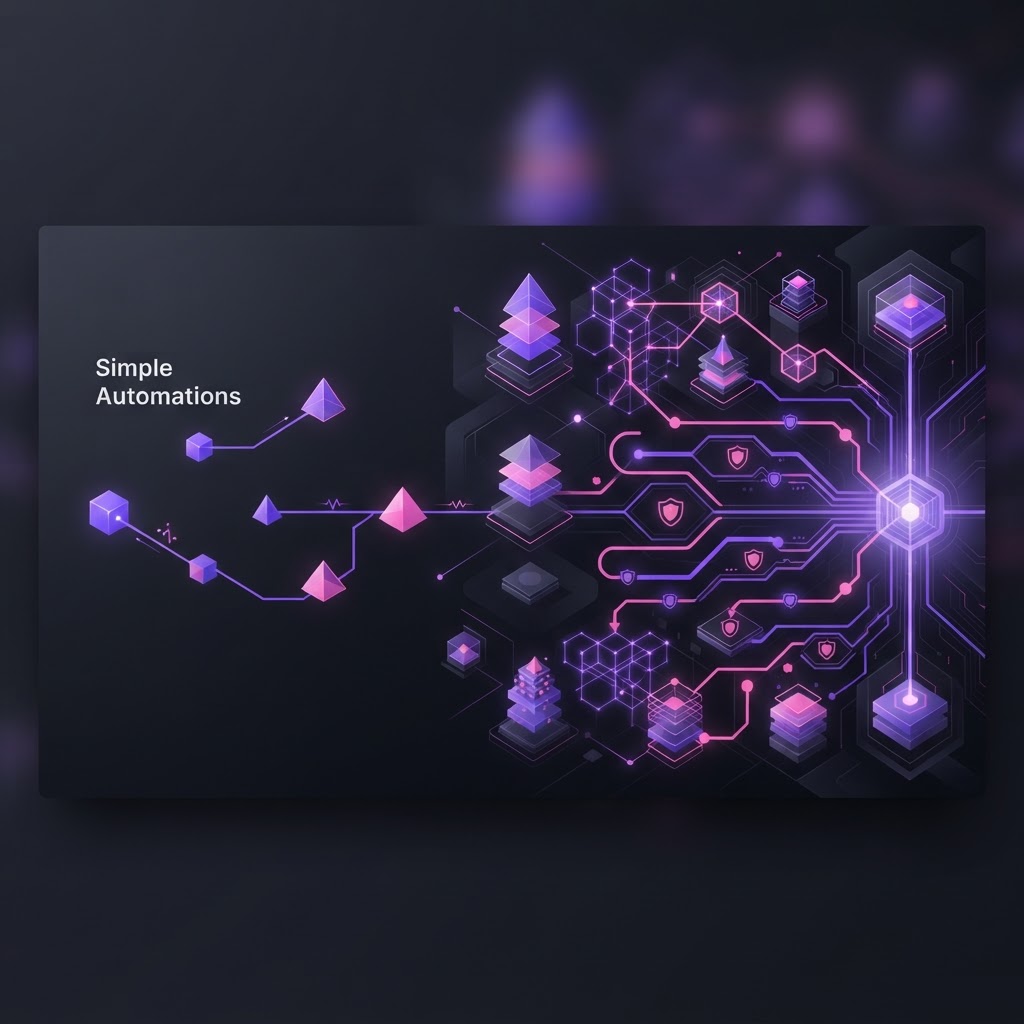
The Automation Trap
Most founders get excited when they connect two apps for the first time. They see a trigger in a CRM, a webhook fires, and a Slack message lands. It feels like magic. But six months later, that magic becomes a nightmare of "failed jobs," missing data, and manual cleanup. If your automation logic is a flat sequence of events, you are not building an application—you are building technical debt.
At Base44, we see this constantly. Founders try to force complex business logic into simple triggers, ignoring the fact that real-world operations are messy, asynchronous, and prone to error. It is time to stop building brittle automations and start engineering workflows.
Rethink the Trigger
In Base44, an automation is a static response to an event. A workflow is a state-managed process. Instead of just firing an action when a row is created, you should be defining an end-to-end lifecycle.
When you build with Base44, you have access to workflow primitives that go beyond simple 'if-this-then-that' logic. Using our switch step with jq conditions, you can build complex branching logic that accounts for business rules before the first API call is even made. Why send a notification if your Entity state doesn't meet the requirements? Logic should happen in the workflow runner, not in the third-party app settings.
Failure Protection: The Silent Hero
The difference between a hobby project and a SaaS business is how it handles failure. If an external API like Stripe or Salesforce times out, does your process die?
Base44 workflows are designed for durability. By using the wait step, you can implement retry strategies or pauses that are truly durable. You aren't just triggering a function; you are managing a lifecycle. If an InvokeLLM call fails due to rate limits or a transient error, your workflow doesn't just evaporate. It holds state. You can map out a path that verifies data integrity using our typed JSON schemas before committing changes back to your entities via base44.entities.EntityName.update.
Orchestration Over Integration
Stop thinking about connectors as endpoints. Start thinking about them as tools for your agents.
When you pair Base44 Workflows with AI agents, you move from 'automation' to 'orchestration.' Your agents can use managed tool permissions to perform entity CRUD, execute backend functions, and push data across 50+ integrations—all while the workflow manages the flow control.
For example, don't just 'sync' a lead from a form. Trigger a workflow that:
- Validates the entity data.
- Uses
InvokeLLMto score the lead with a structured JSON schema. - Branches via
switchbased on the score. - If high-value, updates the CRM and alerts the sales team via
SendPushNotification.
The Founder's Reality Check
If your business logic lives inside the settings page of a third-party automation tool, you have lost control of your product. You are at the mercy of their interface, their downtime, and their limitations. By moving your core logic into Base44 Workflows, you centralize your business rules, secure your data with Row-Level Security, and ship changes across your entire stack—iOS, Android, and web—simultaneously.
Stop automating tasks. Start building systems. It is time to treat your automation logic with the same rigor you apply to your database schema.