Stop Building Monolithic AI: Mastering Sub-Agent Architecture
Move beyond basic prompts. Learn how to architect modular sub-agents within Base44 to delegate specialized tasks and scale your product's intelligence effectively.
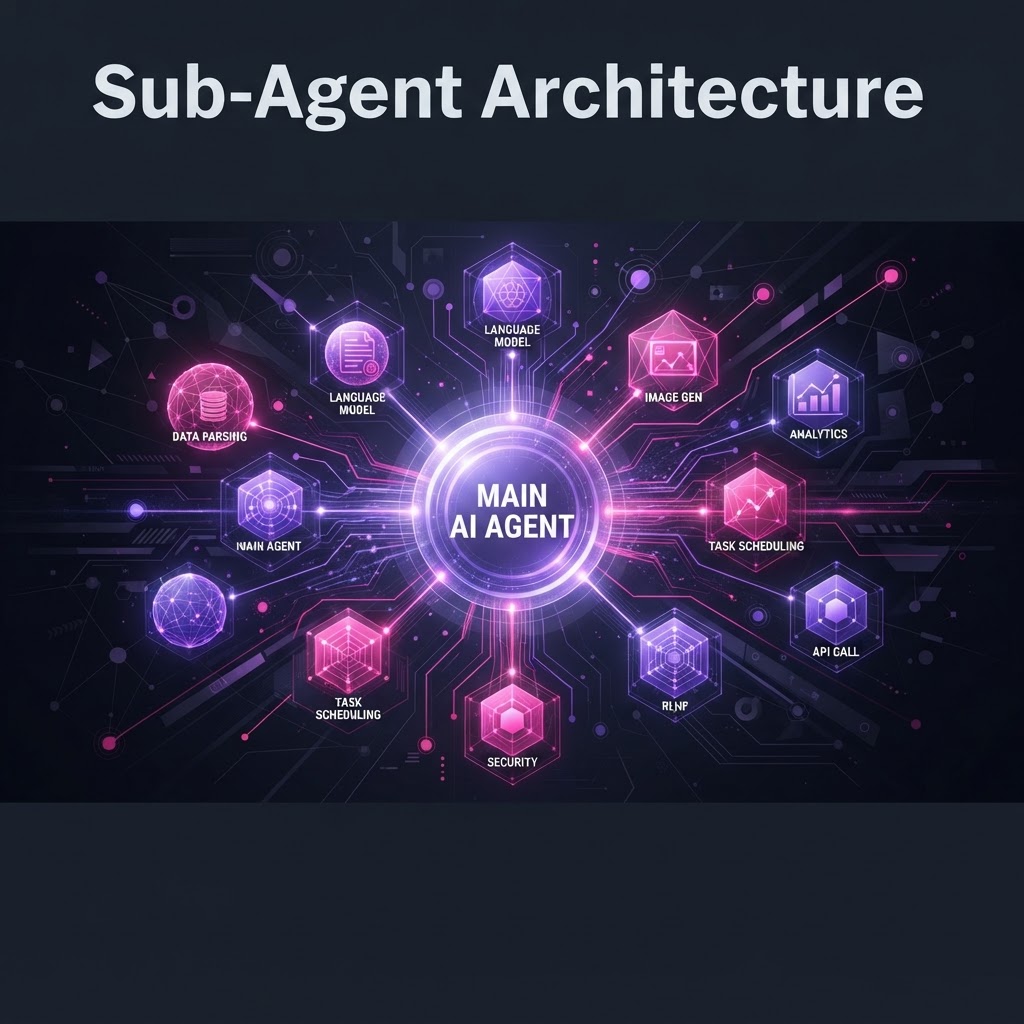
Most developers building AI apps today hit a wall: they try to force one massive, complex prompt to handle everything. It leads to hallucinations, high latency, and an impossible debugging experience. If you are building for scale, stop trying to build a 'God Prompt' and start building a team of specialized sub-agents. At Base44, we view AI not as a feature, but as a workforce. When you delegate tasks to smaller, focused agents, your entire application becomes more reliable and easier to iterate on.
1. Define Clear Functional Boundaries
Every sub-agent needs a single job. Don't build an agent that 'does support.' Build a 'Sentiment Analyzer' agent and a 'Ticket Routing' agent. Use the InvokeLLM integration to create these specialized workers. By restricting the response_json_schema for each agent, you ensure the output is always machine-readable and predictable. When you define the scope strictly, you reduce the surface area for errors.
2. Use Entities as Shared Memory
Your sub-agents shouldn't pass massive, redundant context back and forth. Instead, use Base44 entities as the single source of truth. When one agent processes a task, have it perform a base44.entities.Task.update to record the progress. Other agents can then poll or trigger based on those record changes. This allows you to decouple your logic; agents don't need to 'know' about each other, they just need to know the state of the data.
3. Leverage Workflows for Orchestration
Do not hardcode agent-to-agent logic in your backend functions. Use Base44 Workflows as the 'manager.' Use the switch step with jq conditions to route tasks based on the output of your first sub-agent. If the 'Classifier' agent determines a lead is 'High Intent,' the workflow triggers the 'Sales Outreach' agent. If it's 'Low Intent,' it routes to the 'Nurture' agent. Keeping the orchestration in the Workflow layer makes your architecture visual and debuggable.
4. Implement Human-in-the-Loop RLS
Scalable AI doesn't mean fully automated; it means supervised automation. Use Base44’s built-in Row-Level Security (RLS) to manage which agents have access to specific data. You can have a 'Drafting Agent' create a record that only a 'Manager' role user can approve. By linking your sub-agents to specific User roles via the built-in Auth system, you ensure that AI autonomy never crosses the line into business risk.
5. Build 'Tool-Aware' Specialists
Not every sub-agent needs access to every connector. In Base44, you can scope managed tool permissions to specific agents. A 'Financial Agent' might need access to your Stripe connector, while a 'Scheduling Agent' only needs the Google Calendar integration. By stripping away unnecessary permissions, you make your agents more secure and prevent them from accidentally acting on the wrong data sets.
6. Audit with Native Logging
Since your sub-agents are performing entity CRUD operations, you get an automatic audit trail. If a sub-agent acts up, don't guess—check the entity history. Because Base44 stores the history of create and update operations, you can see exactly which agent modified a record and when. This is the difference between a prototype and a production-grade system.
Build Faster, Delegate Better
The goal isn't to build a more complex model; it's to build a more sophisticated system. By breaking down your application into specialized, entity-backed sub-agents managed by workflows, you can ship faster and scale without the technical debt. Log into Base44, define your entities, and start building your team of agents today.