Debugging at the Speed of Thought: The Rise of Superagent Voice and Vision
Real-time voice and screen sharing are transforming how we build. Here is how Superagents are moving from simple automation to active, visual development partners.
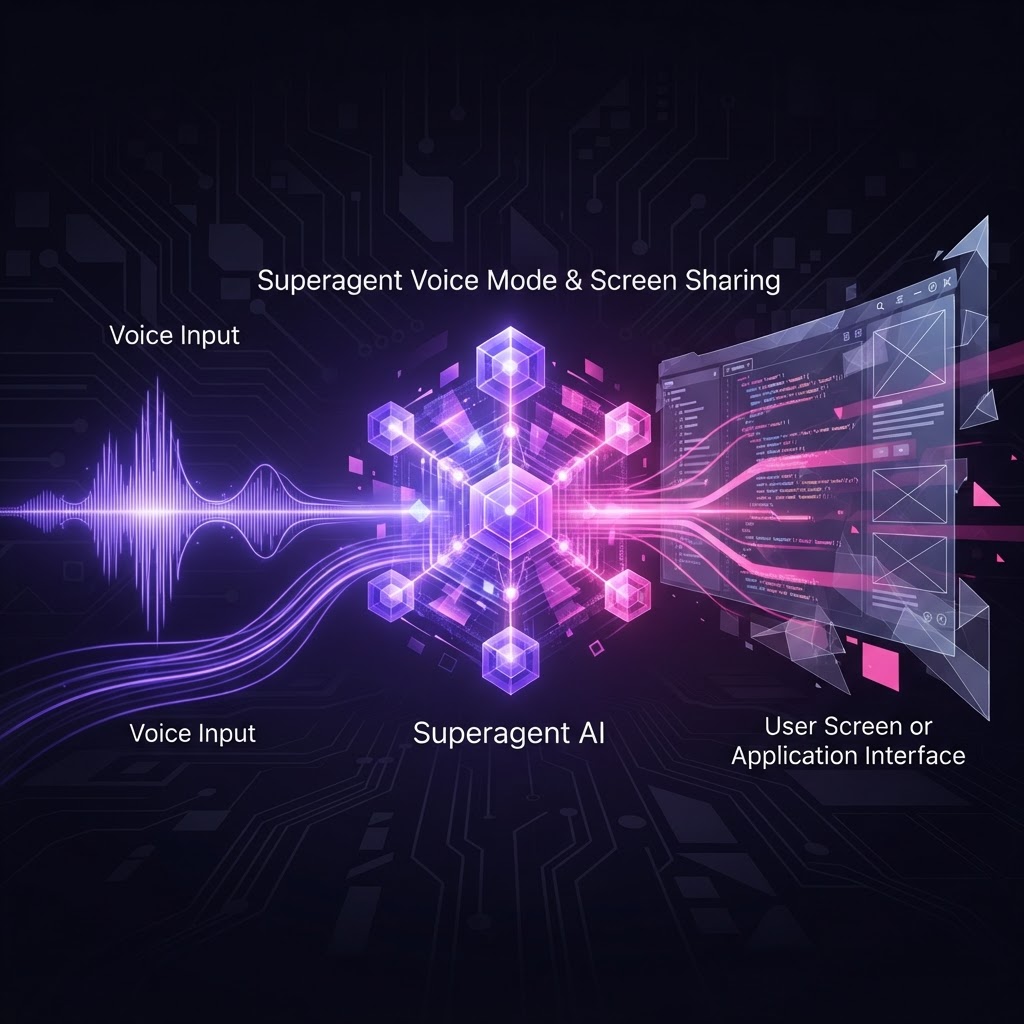
The Latency of Context
We have spent the last few years teaching AI to write code. We have been playing 'prompt engineer'—typing out intent, waiting for an output, and iterating. It is effective, but it is slow. The friction of translating a visual UI bug into a textual prompt is where most of the development time dies. That is changing with the integration of real-time voice and screen sharing into the Superagent workflow.
Moving from Chat to Co-Pilot
At Base44, we built the platform to handle the heavy lifting of backend infrastructure, RLS, and entity management. But the next leap isn't about better code generation; it is about better context sharing. Imagine identifying a bug in a dashboard, firing up a voice session, and sharing your screen. Instead of explaining the issue, your Superagent sees the rendered React + Tailwind component, parses the state of your entities via the SDK, and identifies the logic error in real-time.
By leveraging the same infrastructure that powers our InvokeLLM and vision capabilities, these agents act as true managers of your business operations. They don't just 'know' your schema; they 'see' your app exactly as the user does.
Why This Matters for Founders
When you use Base44 to build an app, your entities (defined as typed JSON schemas) become the source of truth. With voice-enabled Superagents, you can verify your business logic faster than ever. Need to adjust a workflow? Trigger a step-change in your logic? Simply talk through the requirement while the agent observes your staging environment.
The Future of 'Building Fast'
We are moving toward a paradigm where the human provides the vision and the Superagent handles the implementation. We are already integrating multi-channel agents and proactive workflows. When you bridge the gap between human voice, visual screen context, and deep integration with your backend—using tools like our entity CRUD system—the feedback loop shrinks to zero.
Stop typing, start building. The future of AI-assisted development isn't about generating more code; it is about having a partner that finally sees what you see.